



Can a Salon Fix Box-Dyed Hair? What to Expect Before a Color Correction
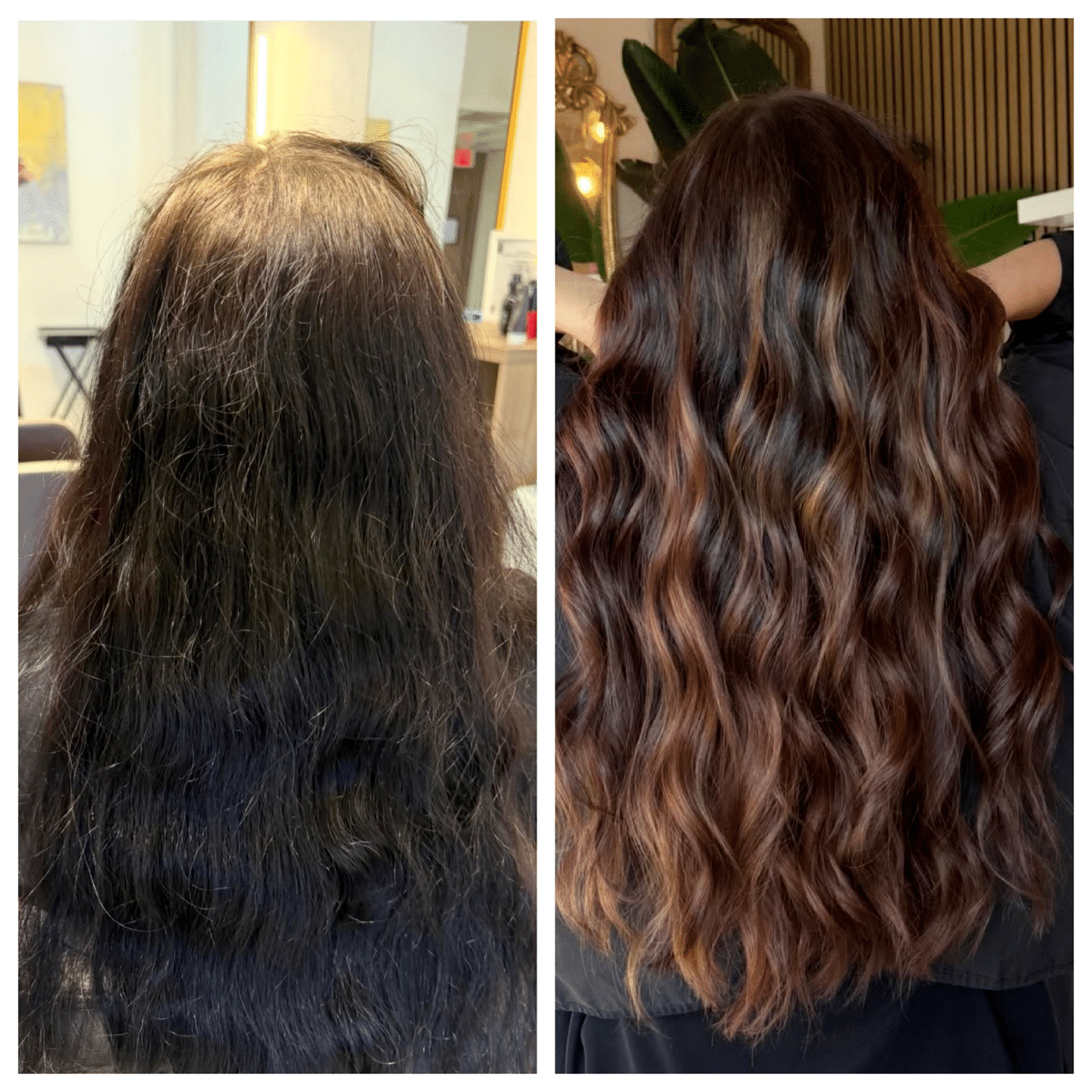
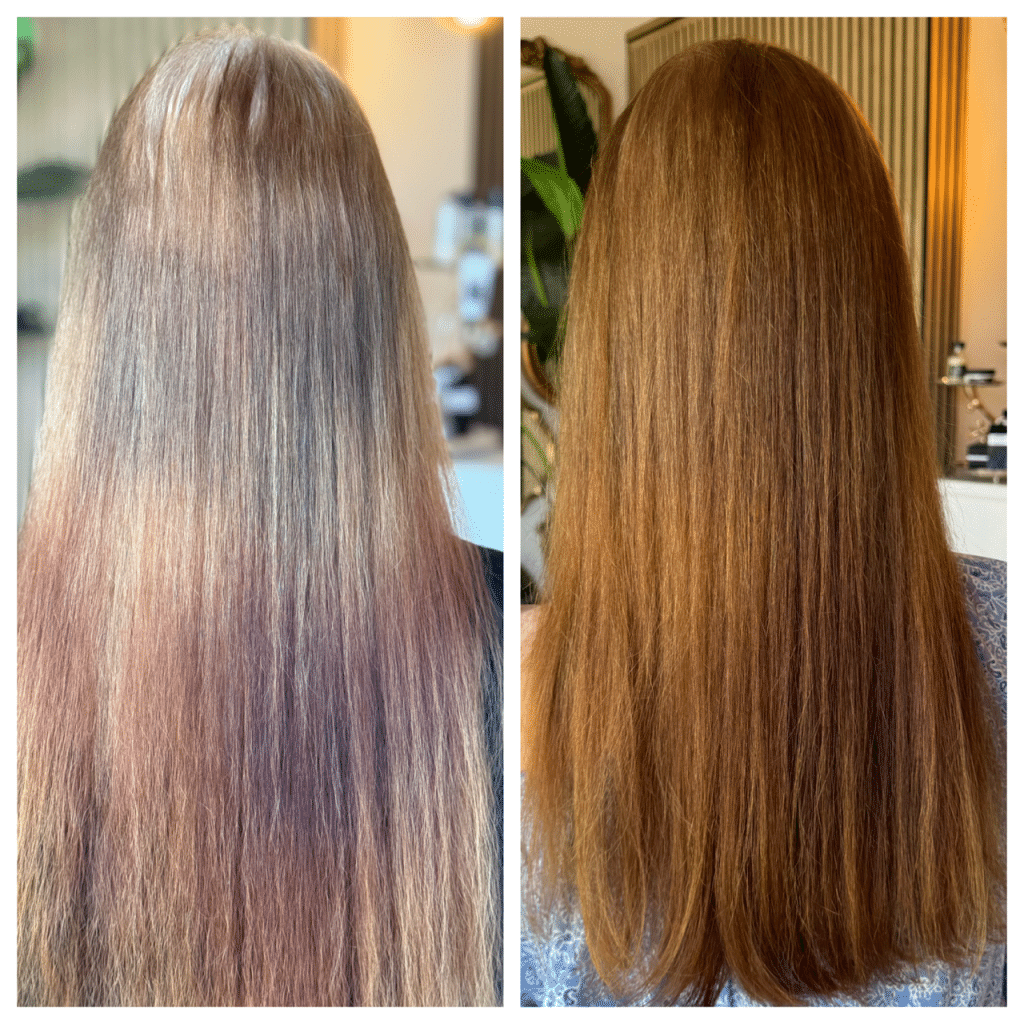
Box dye can seem like a quick solution when you want to cover gray, go darker, refresh faded color, or make a change at home. But when the result comes out too dark, uneven, patchy, overly warm, or completely different from what you expected, fixing it usually requires more than simply putting another color over it.
At Salon.B in Naples, Florida, corrective color starts with understanding what is already on the hair, what the client wants to achieve, and—most importantly—what the hair can safely handle.
A color correction is not one-size-fits-all. In some cases, a significant improvement may be possible in one appointment. In others, reaching the final goal may require more than one visit.
Why Box Dye Can Be Difficult to Correct
Box color does not know your hair history.
It does not know whether your ends are porous, whether you have old highlights underneath, how much gray you have, whether certain areas have been colored repeatedly, or how your natural hair will react.
That can leave clients with problems such as:
- Hair that looks much darker than expected
- Uneven or patchy color
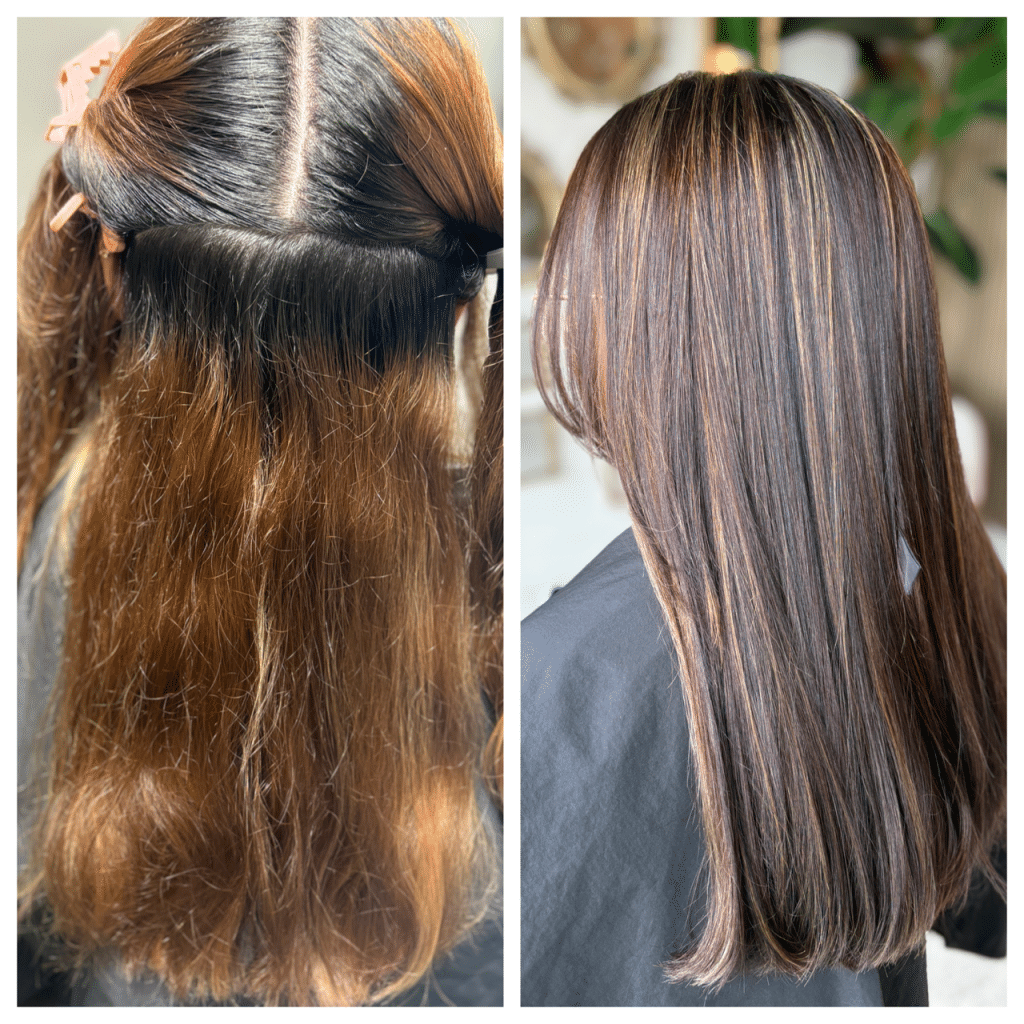
- Dark bands through the mids and ends
- Roots that do not match the rest of the hair
- Unwanted red, orange, or overly warm tones
- Highlights that become muddy or disappear
- Different colors in different areas of the hair
This is why applying another box color over the problem can sometimes make the correction more complicated.
Can a Professional Salon Fix Box-Dyed Hair?
In many cases, yes—but the first goal is not simply to make the hair lighter or change the tone.
The first goal is to determine what is realistically and safely possible.
During a corrective-color consultation, a stylist may need to consider:
- Your natural hair color
- Previous professional color
- Box color history
- How many times the hair has been colored
- Previous highlights or lightener
- The condition and strength of the hair
- Your desired result
- How much maintenance you are comfortable with
Two clients can walk into the salon with similar-looking dark hair and require completely different correction plans because their color histories are different.
Why Your Color History Matters
Your stylist needs the full story—even if something was done months or years ago.
Permanent color can remain in the hair long after the visible result has faded. Repeated applications can also create buildup, especially through the mids and ends.
If you have used:
- Permanent box dye
- Semi- or demi-permanent color
- Henna or other direct dyes
- At-home lightener
- Previous highlights
- Root touch-up products
tell your stylist during the consultation.
The more information we have, the better we can plan the safest approach.
And there is no judgment. We simply need to know what we are working with.
Why a Color Correction May Take More Than One Appointment
One of the biggest misconceptions about corrective color is that every problem can be completely fixed in a single visit.
Sometimes it can.
Sometimes it should not be.
If removing enough artificial pigment in one appointment would compromise the condition of the hair, the better decision may be to correct it gradually.
For example, a client who has repeatedly colored her hair very dark and now wants to become much lighter may need a series of appointments rather than one aggressive service.
Healthy hair is always more important than forcing a result in one day.
At Salon.B, we would rather create a realistic plan than promise a result the hair cannot safely support.
What If Your Hair Turned Too Dark?
Hair that has become too dark from box dye may need more than another color placed over it.
Depending on the situation, your stylist may recommend removing or reducing some of the artificial pigment, creating dimension with strategically placed highlights, adjusting unwanted tones, or gradually transitioning the color over several appointments.
The correct approach depends on what is underneath the dark color.
What If Your Color Is Patchy or Uneven?
Uneven color can happen when different areas of the hair absorb color differently.
Porous ends may become much darker than healthier areas. Previously lightened sections may react differently from natural hair. Repeated applications can also create bands of color.
Correcting patchiness often requires treating different areas of the hair differently rather than applying one formula from roots to ends.
That is one of the biggest differences between professional corrective color and simply recoloring the entire head.
What If Your Hair Has Unwanted Orange or Red Tones?
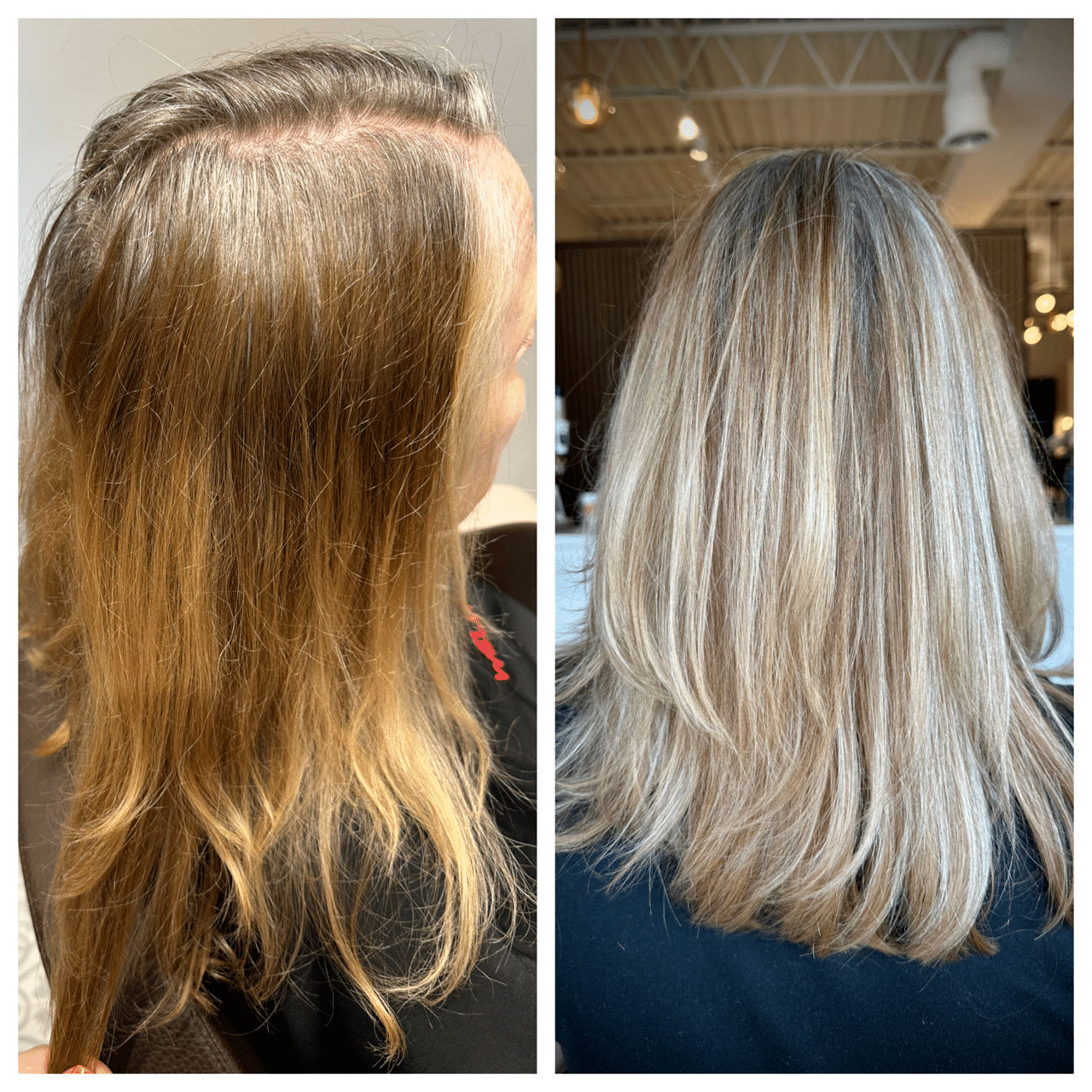
Warmth can appear when darker artificial color is removed or when hair is lightened.
The solution is not always as simple as adding an ash color.
A professional colorist looks at the underlying pigment, the level of the hair, its condition, and the final goal before deciding how to neutralize unwanted warmth.
Trying to repeatedly cover unwanted tones at home can sometimes create darker buildup without actually solving the underlying problem.
Will You Need a Strand Test?
Sometimes.
A strand test can help a stylist understand how previously colored hair may respond before committing to a larger corrective service.
This can be especially useful when the hair has a complicated color history, has been repeatedly colored dark, has previously been lightened, or shows signs of stress.
Not every correction requires one, but there are situations where it gives us useful information before moving forward.
Hair Health Comes First
Corrective color is not only about what color we can create.
It is also about what the hair can handle.
If the hair is overly compromised, the safest recommendation may be to improve its condition first or approach the correction gradually.
At Salon.B, our corrective-color plans may incorporate professional treatments when appropriate, including products such as K18, alongside the color service.
The goal is beautiful color and hair that still looks and feels healthy.
Why We Do Not Quote Corrective Color Over the Phone
This is important.
Salon.B does not give corrective-color quotes over the phone because there are too many variables involved.
We need to actually see the hair.
A correction may involve several different techniques, formulas, treatments, and hours of work depending on the starting point and desired result.
A consultation allows us to assess:
- Your current color
- Your color history
- Your hair condition
- Your desired result
- Whether your goal is realistic in one appointment
- What maintenance may be required afterward
Once we understand those things, we can recommend the appropriate plan.
What Should You Bring to a Color-Correction Consultation?
Come prepared with as much information as possible.
If you have photos of your hair before the box dye, bring them. If you remember which products or colors you used, tell us. And bring inspiration photos showing both what you like and what you do not like.
The goal is not to recreate another person’s exact hair.
The photos help your stylist understand the direction you are hoping to go.
Can Corrective Color Look Natural?
Absolutely.
Corrective color does not necessarily mean a dramatic transformation.
Sometimes the best correction is restoring natural-looking dimension, softening a harsh root line, breaking up overly dark color, balancing unwanted warmth, or creating a more flattering transition between shades.
The result should make sense for your hair, your lifestyle, and the amount of maintenance you want.
Corrective Hair Color in Naples, Florida
At Salon.B in Naples, our approach to corrective color is based on consultation, honesty, hair health, and realistic expectations.
Whether you are dealing with box dye that became too dark, uneven highlights, unwanted warmth, color buildup, or a previous color result you are unhappy with, the first step is understanding what happened and creating the right plan to move forward.
Sometimes that plan is one appointment.
Sometimes it is a process.
Either way, we would rather be honest about what your hair needs than promise something that is not realistic.
Ready to Talk About Your Hair?
If you are dealing with an unwanted color result, contact Salon.B in Naples to schedule a corrective-color consultation.
Because every correction is different, pricing and the recommended service plan are determined after we evaluate the hair in person.
Frequently Asked Questions
Professional colorists can often reduce, remove, blend, or correct artificial pigment, but the result depends on the type of color used, how many times it was applied, the condition of the hair, and the desired final result.
Sometimes, but not always. More complicated corrections may require multiple appointments to protect the hair and reach the desired result gradually.
Hair can absorb artificial pigment differently depending on its porosity, previous color history, starting level, and repeated applications. Areas that are more porous can sometimes become significantly darker.
In some cases, yes, but the stylist needs to evaluate the existing artificial pigment and the condition of the hair first. Previously colored hair may lift differently than natural hair.
We generally recommend speaking with your stylist before adding additional color-removal products or chemicals. Every extra process changes what the stylist will be working with.
Corrective color varies significantly depending on the starting point, desired result, time required, techniques used, and condition of the hair. Salon.B evaluates corrective color by consultation rather than quoting it over the phone.