



Why Hair Color Turns Patchy or Too Dark — and Why the Fix May Take More Than One Appointment
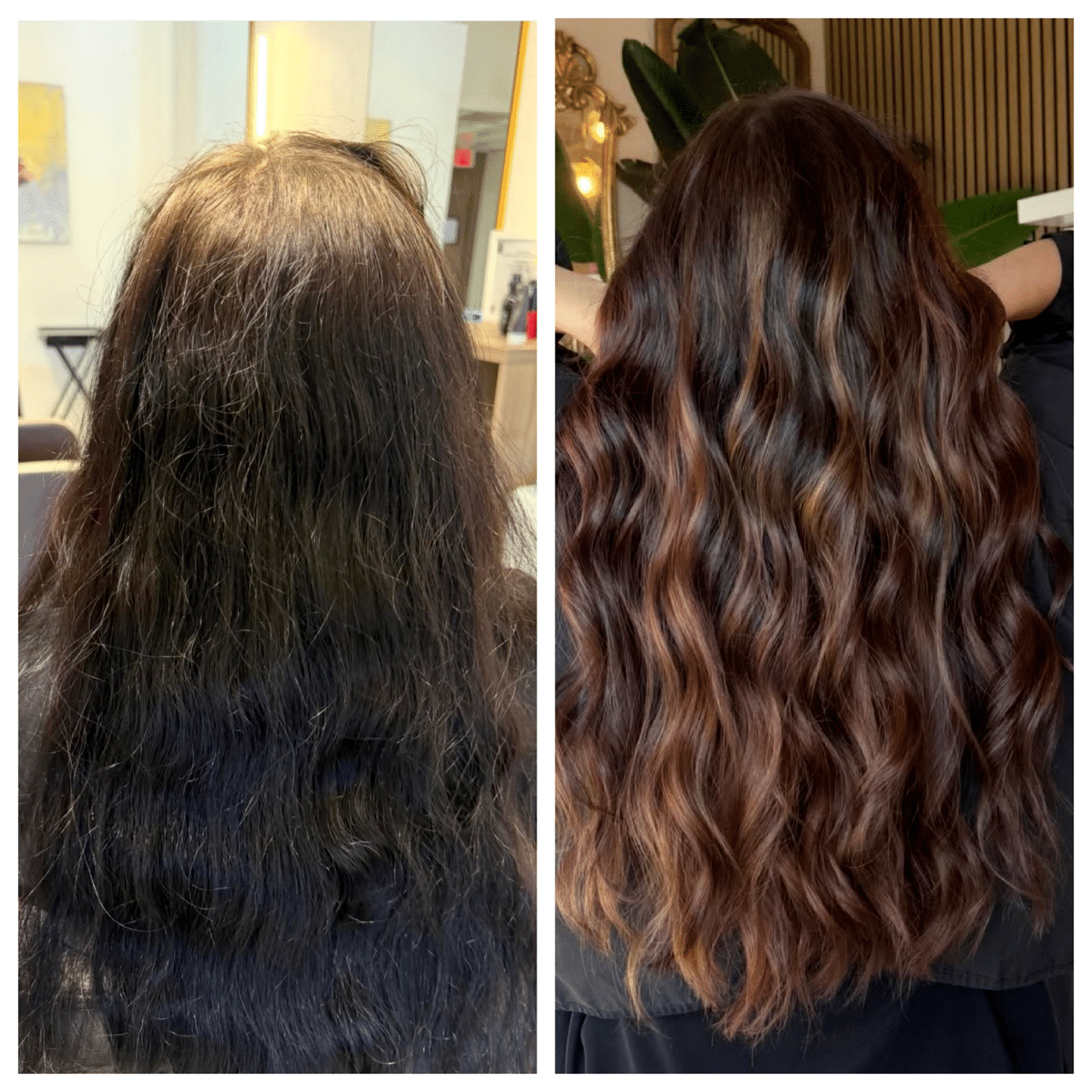
Hair color can go wrong in a few different ways. Sometimes it turns too dark. Sometimes the roots and ends don’t match. Other times, certain areas grab more color and the result looks patchy, muddy, or uneven.
The important thing to know is this: uneven color usually needs to be corrected based on what each area of the hair actually needs.
At Salon.B in Naples, we start by looking at the color history, condition of the hair, and the result you are trying to achieve before deciding how to correct it.
Why Does Hair Color Turn Patchy?
Different areas of the hair can react differently to color.
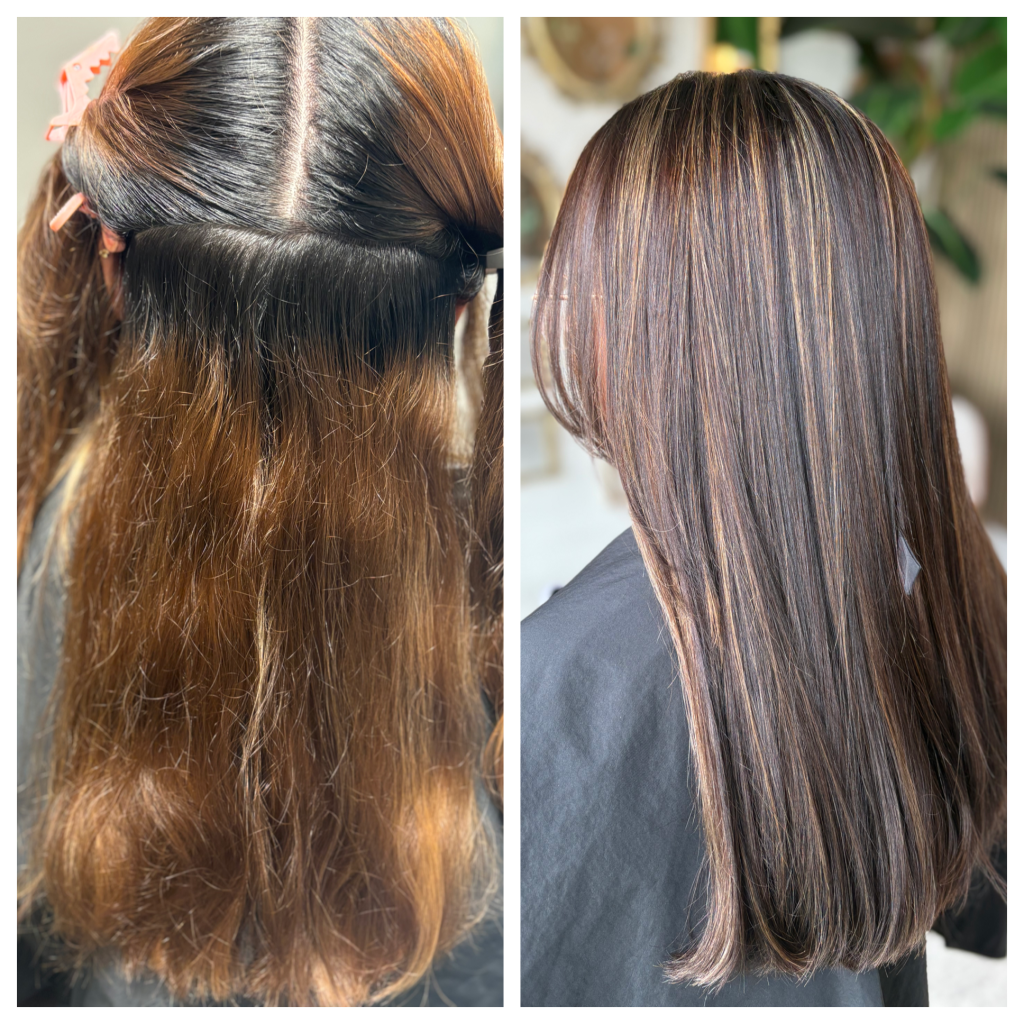
Previously highlighted hair, porous ends, repeated permanent color, old box dye, and natural new growth can all respond differently—even when the same formula is applied.
That is why a correction may require more than one formula or technique.
Sometimes the roots need one thing, the mids need another, and the ends need something completely different.
Why Does Hair Get Too Dark?
One of the most common reasons is color buildup.
If permanent color continues to be pulled through previously colored hair, the mids and ends can become darker and darker over time.
You may only need gray coverage or a root touch-up, but repeatedly coloring the entire length can leave the hair looking flat, heavy, and overly dark.
This is why maintaining color correctly matters just as much as choosing the right shade.
Can You Just Put a Lighter Color Over It?
Usually, no.
Color does not simply lift previously colored hair because you choose a lighter shade.
If too much artificial pigment has built up, some of that pigment may need to be reduced or removed before we can create a lighter, more dimensional result.
That is where professional color correction comes in.
Why Can a Correction Take More Than One Appointment?
Because healthy hair matters more than forcing everything to happen in one day.
If the hair has years of dark color, previous highlights, or chemical damage, trying to remove too much pigment at once can compromise the hair.
Sometimes the best plan is to make a noticeable improvement at the first appointment and continue working toward the final result gradually.
As stylists, we have to know when to keep going—and when the hair is telling us to stop.
What If the Problem Is Uneven Highlights?
Corrective color is not only about dark box dye.
Highlights can also become uneven, overly bright, brassy, striped, or disconnected from the rest of the hair.
Depending on what we see, the correction might involve highlights, lowlights, a root melt, toner, gloss, or a combination of techniques.
There is no single formula for every correction.
Hair Health Comes First
A beautiful color is only beautiful if the hair still looks and feels healthy.
At Salon.B, we take the condition of the hair into account before deciding how aggressively we can correct the color. When appropriate, we may also recommend professional treatments such as K18 as part of the process.
Sometimes the healthiest correction takes a little longer.
And that is okay.
Corrective Hair Color in Naples, Florida
If your color is too dark, uneven, patchy, brassy, or simply not what you expected, the first step is figuring out why.
At Salon.B, we focus on realistic expectations, healthy hair, and a correction plan that makes sense for your starting point.
Some corrections can be handled in one appointment.
Others are a process.
Either way, we would rather be honest about what your hair can handle than promise a result that is not realistic.
Need Help With Your Hair Color?
Corrective color is evaluated through consultation because every situation is different.
If you are dealing with overly dark color, uneven highlights, patchiness, or unwanted tones, contact Salon.B in Naples to schedule a consultation.
Frequently Asked Questions
Different areas of the hair can absorb color differently because of previous color, highlights, porosity, damage, or buildup.
In many cases, yes. The process depends on how much artificial pigment is in the hair, its condition, and how light you want to go.
No. Some corrections can be completed in one visit, while more complicated situations are safer to correct gradually.
Sometimes. Strategically placed highlights can bring dimension back into dark hair, but the hair should be evaluated first.